What are EMP and HEMP?
An electromagnetic pulse (EMP) is an event that produces very high field strength in a very short time and can destroy electronic circuits through supply lines and cables acting as antennas. The high-altitude scenario is known as HEMP, and its footprint can reach continental scale; local sources such as grid switching events and intentional interference devices (IEMI) produce similar pulses as well.
The technical literature analyses the pulse in three components: E1 (on the nanosecond scale, the most dangerous for electronic circuits), E2 (lightning-like) and E3 (stretching over minutes, critical for long lines and transformers). Protection design addresses all three together.
The protection architecture
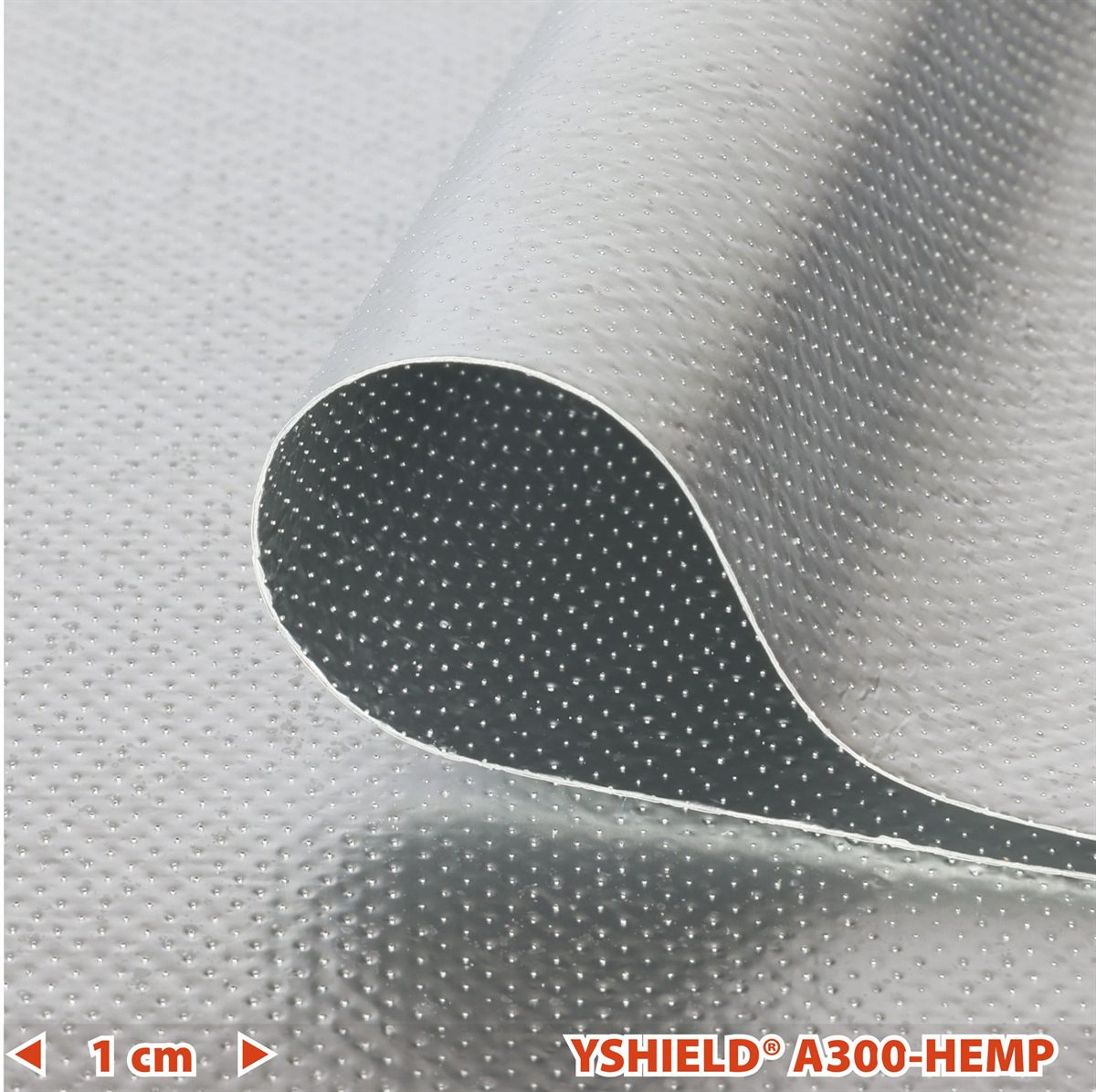
Civil projects aim for 'proportional resilience' rather than full military compliance: enveloping the data room or a critical server cabinet at 80+ dB dramatically improves recoverability in a disaster scenario. The A300-HEMP fleece was tested for exactly this purpose, attenuating the H and E components by up to 123 dB across the 10 kHz-40 GHz band.
- Topological shielding: wrapping the protected volume (room/floor/cabinet) in a continuous conductive envelope — the foundation of the MIL-STD-188-125 approach
- Point-of-entry control: surge arresters and filters on all power/data lines; conversion to fibre wherever possible
- Compartmentalization: keeping critical spare hardware in separately protected cabinets
- Verification: documenting shield continuity by measurement, with periodic checks
Frequently Asked Questions
Does EMP protection make sense for home users?
Whole-home protection is a disproportionate investment; the sensible civilian step is keeping critical spares (drives, radios, power supplies) in a shielded box or cabinet. Corporate continuity facilities are the real home of the structural solution.
Aren't a generator and a UPS enough?
Those are outage solutions; the E1 component can destroy electronic boards regardless of the power supply. Power continuity and pulse protection are separate, complementary disciplines.
Does a Faraday cage stop every EMP?
A correctly designed envelope (entries filtered, continuity verified) is very effective against E1/E2; E3 acts through long grid lines and therefore requires line protection and operational measures.